
 40G/100G Optical Transceivers
 25G Optical Transceivers
 10G Optical Transceivers
 155M/2.5G Optical Transceivers
 1G Optical Transceivers
 1G BIDI Optical Transceivers
 Dual-Rate Optical Transceivers
 FC 16G/32G Optical Transceivers
 CWDM Optical Transceivers
 DWDM Optical Transceivers
 SGMII Port Optical Transceivers
 XFP Optical Transceivers
 100M/1G/10G Coppers
 Full-Rate AOC & Breakout Series
 10G/40G Active DAC Series
 Full-Rate Passive DAC Series
 40G/100G Passive Breakout DAC Series
 Regular/MTP-MPO Fiber Patch Cords
 MT2011
 MT2010
 CodingBox
 QSFP to SFP Adapter
 首页 > Home > Application Notes > An Introduction To The Differences Between Singlemode And Multimode Fiber Optics
An Introduction To The Differences Between Singlemode And Multimode Fiber Optics
Time: 2023-12-07
As a common transmission medium, optical fiber is widely used in network cabling.
In practical applications, we often encounter single-mode fiber (SMF) and multi-mode fiber (MMF).
Many users are unclear about their differences, leading to misuse.
This article briefly explains the distinctions between single-mode and multi-mode fiber.
1. Similarities Between Single-mode and Multi-mode Fiber
Single-mode and multi-mode fiber share the same basic structure, consisting of three transparent layers from the inside out:
• Core: the innermost layer with the highest refractive index
• Cladding: the middle layer with a lower refractive index
• Coating: the outermost protective layer
Due to the refractive index difference at the core-cladding boundary, total internal reflection occurs, keeping light confined within the core during transmission.
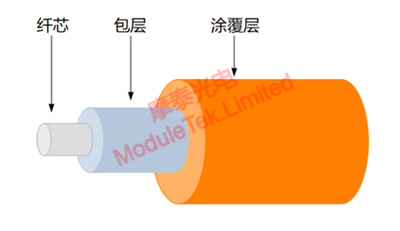
Figure 1 Structural Cross-section of Optical Fiber
2. Differences Between Single-mode and Multi-mode Fiber
A. Different Core Diameters
Although both types have the same cladding diameter of 125 μm, the core of multi-mode fiber is much larger than that of single-mode fiber.
• Single-mode fiber core: typically 9 μm
• Multi-mode fiber core: usually 50 μm / 62.5 μm
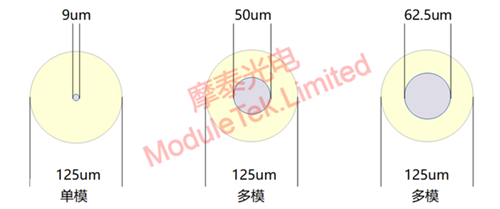
Figure 2 Comparison of Core Diameters Between Single-mode and Multi-mode Fiber
B. Different Operating Wavelengths
Single-mode fiber typically operates at 1310 nm and 1550 nm, while multi-mode fiber mainly uses the 850 nm band.
C. Different Attenuation and Dispersion
Single-mode fiber has low attenuation and low dispersion, resulting in small signal loss and low distortion during transmission.
Multi-mode fiber has relatively high attenuation and greater dispersion, which limits its effective transmission distance.
D. Different Transmission Distances
Single-mode fiber is designed for long-distance transmission, typically covering ranges from 1 km to 120 km.
Due to severe dispersion, multi-mode fiber is only suitable for short-distance links, generally less than 1 km.
E. Different Jacket Colors
Jacket color is a straightforward way to distinguish patch cords:
Single-mode fiber: yellow jacket
Multi-mode fiber:
• OM1 / OM2: orange jacket
• OM3: aqua blue jacket
• OM4: aqua blue or purple jacket
• OM5: lime green jacket

Figure 3 Jacket Color Comparison Between Single-mode and Multi-mode Fiber
3. Advantages and Disadvantages
A. Single-mode Fiber
Advantages:
Low attenuation, low dispersion, high bandwidth, ideal for large-capacity, long-distance communication.
Disadvantages:
Sensitive to contamination, requires high-precision connectors, and uses more complex light sources.
Therefore, installation and equipment costs are relatively high.
B. Multi-mode Fiber
Advantages:
Large core diameter, less sensitive to contamination, easy connection, and lower cost for light sources and supporting equipment.
Disadvantages:
High attenuation and dispersion, only applicable for short-distance communication.
Moduletek Limited is at your service!
If you have any questions about the above content, please contact us via email: sales@moduletek.com
For further inquiries about the above content, please contact us at: sales@moduletek.com